
 All Posts
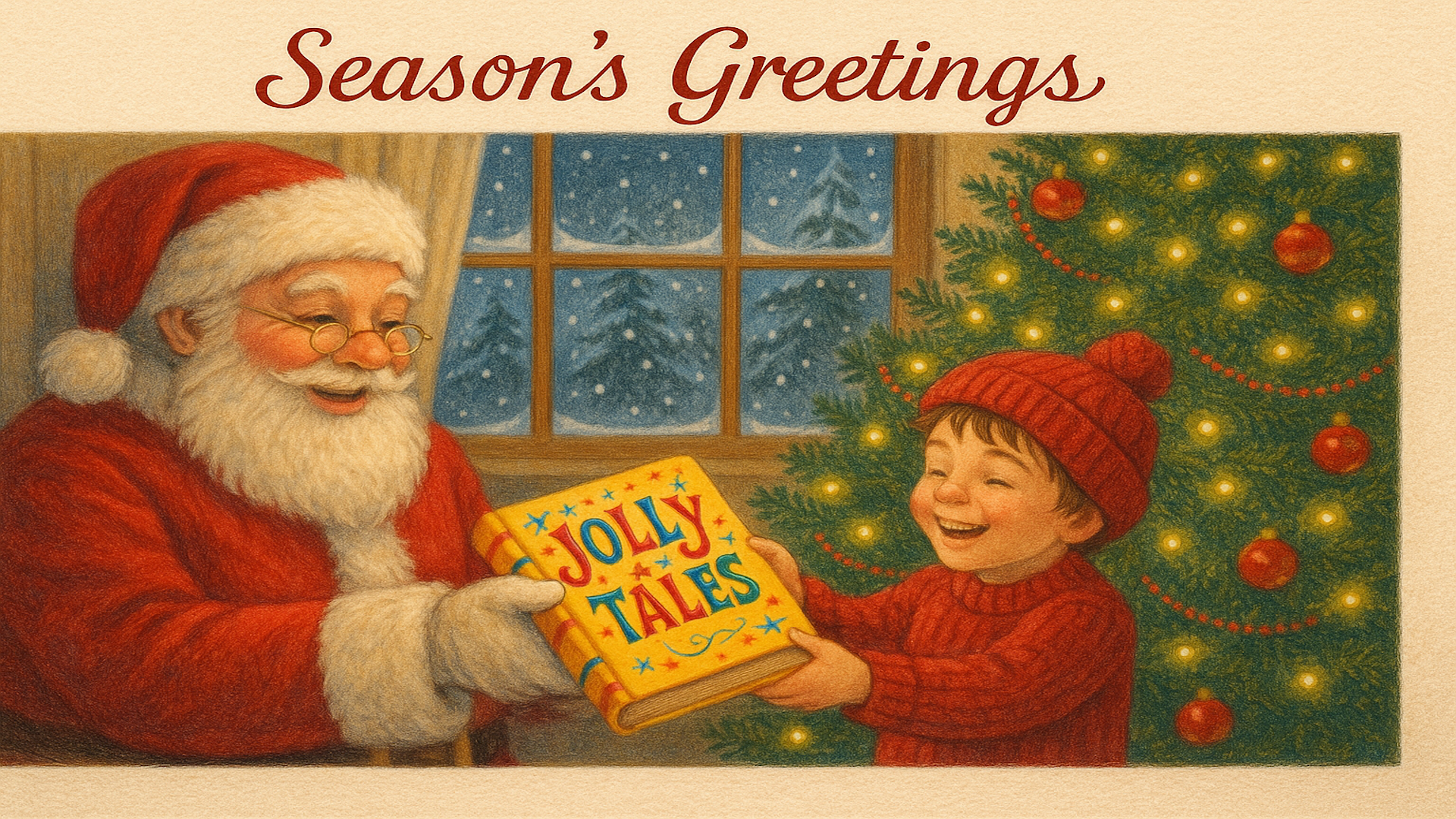
Every December, children across the world write excited letters to Santa filled with toys, games, and holiday wishes. But what if this year, your child included books on their Christmas list — not because you asked them to, but because they truly wanted to?
Books unlock imagination, creativity, language, and emotional development. With a few small shifts in the holiday routine, parents can nurture a love of reading strong enough that children want to ask Santa for books.
Below are five expanded, research-supported ways to make books an exciting part of your child’s Christmas wishes.
1. Make Books Feel Like Gifts, Not Homework
Children sometimes associate books with schoolwork, routines, or tasks. To spark genuine interest, books need to feel exciting, surprising, and visually appealing.
Here’s how to make books feel like true holiday gifts:
- Wrap books the same way you wrap toys with patterned gift wrap, bows, and decorative tags. Presentation matters — especially for younger children.
- Display books in festive ways: place them near the tree, add them to stockings, or stack them in a holiday “book mountain.”
- Choose books with engaging covers — shiny foil accents, embossed titles, or bold illustrations draw a child’s eye.
- Let children preview books in bookstores or libraries, treating it like a treasure hunt.
- Give one early gift: a December “warm-up” book paired with cozy pajamas or a mug of cocoa.
Research shows that when children associate reading with positive emotional experiences, their motivation and engagement increase significantly¹. The more magical the book experience feels, the more likely children are to ask Santa for more.
2. Let Kids Choose Books Connected to Their Favorite Interests
Children are most motivated to read when the topic aligns with something they already love. When kids see books as extensions of their passions, they view reading as an adventure — not an obligation.
Ways to tap into their interests:
- For animal lovers:
Suggest titles like National Geographic Little Kids: First Big Book of Animals or Owl Diaries. - For superhero fans:
Try graphic novels like Dog Man, Cat Kid Comic Club, or Spider-Man Adventures. - For STEM-curious kids:
Explore series like Ada Twist, Scientist or The Questioneers. - For imaginative thinkers:
Try The Magic Tree House, How to Catch an Elf, or interactive books like Press Here.
The 2022 Scholastic Kids & Family Reading Report found that children ages 6–11 are far more likely to enjoy and finish books they select themselves². Inviting them to browse covers, flip through pages, or listen to sample narration helps them “discover” stories that feel tailor-made.
Once they show excitement for a specific book, gently say:
“Do you want to put that on your Santa list?”
Chances are, the answer will be yes.
“Do you want to put that on your Santa list?”
Chances are, the answer will be yes.
3. Build the Myth: Santa Loves Stories Too
Children already see Santa as magical — you can use that imagination to encourage book requests in a playful, storytelling-centered way.
Try incorporating a few of these ideas:
- Santa has a huge library at the North Pole, filled with stories from around the world.
- Elves read during breaks or borrow books from Santa’s library.
- Santa chooses special books for children based on their interests, kindness, or creativity.
- Mrs. Claus is the best storyteller in the North Pole, reading to elves during “storytime.”
- Tell them Santa loves when kids ask for stories because it means they’re “growing their imagination.”
This framing turns books into something Santa personally values. Children may become excited to see which stories Santa thinks are perfect for them.
You can even go further:
- Add “North Pole Approved” stickers to wrapped books.
- Leave a note from Santa inside the cover.
- Mention that books are “magical tools for dreamers.”
Suddenly, books become not just gifts — but part of Christmas lore.
4. Create a Two-Part Christmas Wish List: Toys and Books
Instead of steering kids away from toys (which can cause resistance), simply normalize books as part of the holiday wishlist.
Make a fun template with two sections:
- Toys I Want
- Stories I Want to Read
Then:
- Let them decorate the list with drawings or stickers.
- Sit with them as they fill out each section.
- Offer examples: “What’s a story you’d love Santa to bring?”
- Use book catalogues or online browsing to spark ideas.
- Add your own “grown-up” book to model the behavior.
Research consistently shows that when children feel ownership over their choices, reading motivation increases³.
This list format sends a powerful message:
Books aren’t the alternative to toys — they’re a natural, exciting part of Christmas.
5. Build Holiday Traditions That Make Reading Feel Magical
Children are deeply influenced by rhythms and traditions. When reading becomes part of what makes Christmas special, kids begin asking for books because they want to stay connected to that feeling.
Consider adding one or two traditions like:
• Christmas Eve Book Box
Include a book, pajamas, a bookmark, and a small snack. It becomes something they look forward to every year.
Include a book, pajamas, a bookmark, and a small snack. It becomes something they look forward to every year.
• Holiday Countdown Stories
Instead of (or alongside) an advent calendar, read one short story each night leading up to Christmas.
Instead of (or alongside) an advent calendar, read one short story each night leading up to Christmas.
• Under-the-Tree Reading Picnic
Lay a blanket under the tree and read by the twinkling lights.
Lay a blanket under the tree and read by the twinkling lights.
• Family Reading Hour
Each family member opens one book on Christmas Eve and reads together. Parents reading their own books help model the behavior.
Each family member opens one book on Christmas Eve and reads together. Parents reading their own books help model the behavior.
Shared reading reinforces emotional bonding and positive associations with literacy. Children who grow up with reading-centered traditions often develop stronger reading habits and wish for more stories throughout the year⁴.
Final Reflection
Children will ask Santa for books when they see books as fun, magical, and connected to the joy of Christmas. You don’t have to take away toys — just weave books into the holiday experience.
With a little storytelling, a few traditions, and opportunities for joyful choice, books can quickly become one of your child’s most treasured holiday wishes.
References
- Bus, A. G., & Van IJzendoorn, M. H. (1997). A meta-analysis on parent–child reading and literacy development. Review of Educational Research, 67(4), 403–426.
- Scholastic. (2022). Kids & Family Reading Report™. Scholastic Inc.
- Guthrie, J. T., & Wigfield, A. (2000). Engagement and motivation in reading. In M. L. Kamil et al. (Eds.), Handbook of Reading Research (Vol. 3, pp. 403–422). Lawrence Erlbaum.
- Clark, C., & Rumbold, K. (2006). Reading for Pleasure: A Research Overview. National Literacy Trust.