
 All Posts
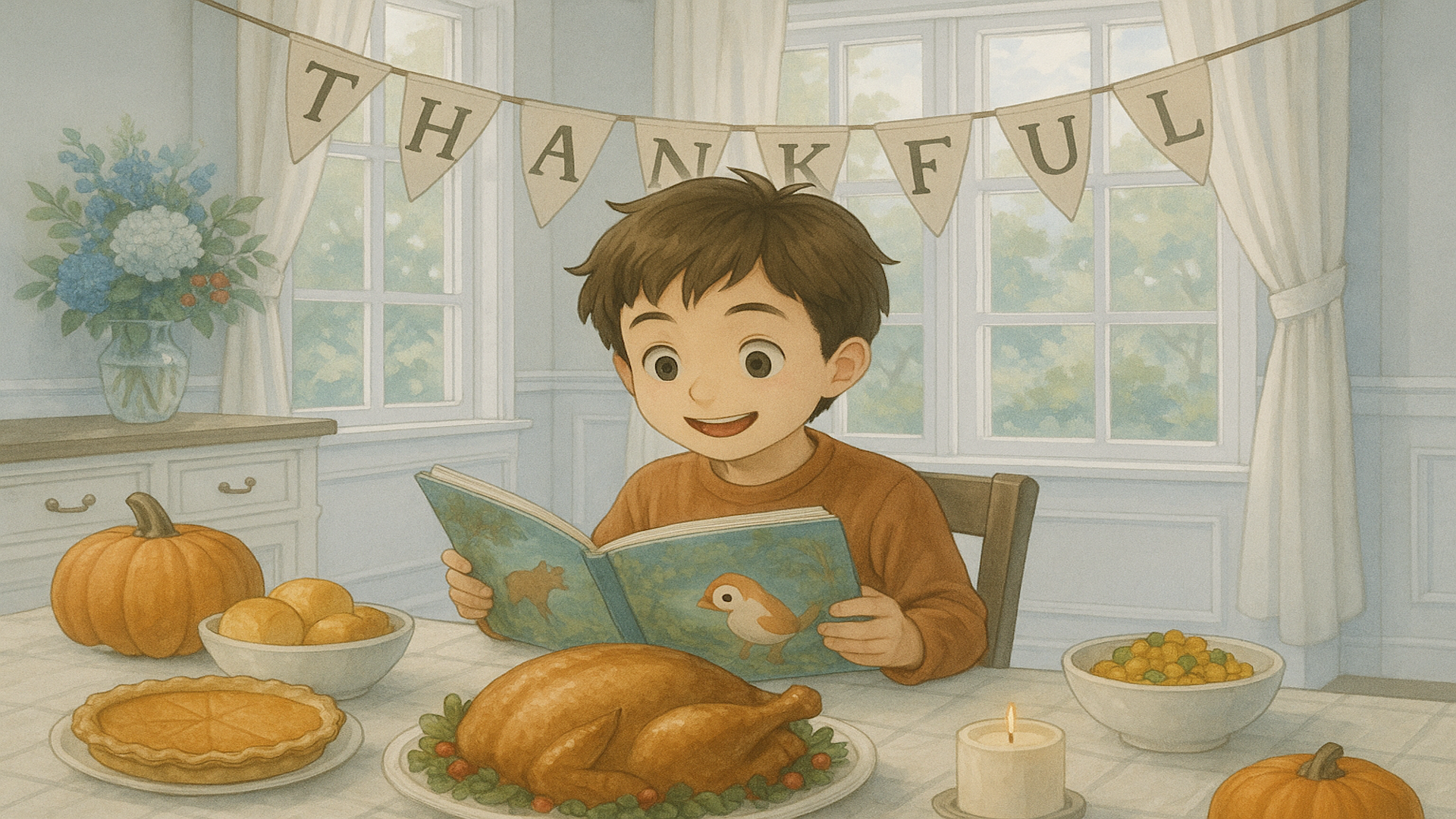
Thanksgiving break is filled with family, travel, food, and a change in routine — which is wonderful, but also one of the times when children’s reading habits tend to slip. Parents often notice that when school pauses, reading does too, especially for kids ages 3–8 who depend heavily on routine to stay engaged.
Researchers have long documented seasonal “reading dips,” even in short breaks. Children lose momentum when daily practice is interrupted, but consistent reading — even in small bursts — protects vocabulary, fluency, and confidence¹².
Here are five Thanksgiving-specific, research-backed strategies to keep your child reading without forcing it or disrupting the holiday spirit.
1. Turn Holiday Recipes Into Real Reading Practice
Thanksgiving is full of opportunities to read in authentic, meaningful ways, something literacy researchers say boosts comprehension and vocabulary³.
Why it works:
Children learn better when reading connects to real-life tasks. Following recipe steps, identifying ingredients, or reading short instructions counts as functional reading — a form of literacy shown to strengthen vocabulary and language skills³.
Children learn better when reading connects to real-life tasks. Following recipe steps, identifying ingredients, or reading short instructions counts as functional reading — a form of literacy shown to strengthen vocabulary and language skills³.
Try This:
- Ask your child to “read” the ingredient list (even spotting letters counts).
- Have them identify the word “turkey,” “pie,” or “mix.”
- Let them look for page numbers or pictures in a recipe book.
This feels like helping — not schoolwork — but it still supports literacy.
2. Use Audiobooks to Make Thanksgiving Travel a Reading Moment
Thanksgiving is one of the busiest travel weeks of the year. Long car rides, airport waits, and family visits create prime opportunities for audiobooks, which research shows are just as beneficial for young children’s language development as traditional read-alouds⁴.
Why it works:
Audiobooks strengthen listening comprehension, vocabulary, and story structure knowledge — all essential reading foundations.
Audiobooks strengthen listening comprehension, vocabulary, and story structure knowledge — all essential reading foundations.
Try This:
- Play a short children’s audiobook on the drive to Grandma’s house.
- If you have the physical book, let your child follow along.
- Choose funny holiday stories or short chapter audiobooks with lively narrators.
Audiobooks turn “dead time” into literacy time — perfect for a chaotic holiday schedule.
3. Build a “Thanksgiving Reading Basket” Kids Can Explore Freely
Research consistently shows that children read more when books are visible, accessible, and tied to their interests¹⁰. During a holiday break, a themed book basket acts as an invitation to read without pressure.
Why it works:
Book choice dramatically increases reading motivation—especially when children feel ownership over what they pick².
Book choice dramatically increases reading motivation—especially when children feel ownership over what they pick².
Try This:
Fill a small basket near the living room or kitchen with:
Fill a small basket near the living room or kitchen with:
- Thanksgiving picture books
- books about family traditions
- silly fall-themed stories
- wordless books for storytelling
- comic-style graphic stories
Kids naturally gravitate toward books when they’re placed in high-traffic areas — especially during slow moments between meals or visits.
4. Start a Short “Gratitude Reading Ritual” Each Evening
Thanksgiving is built around gratitude — and this can be woven directly into reading.
Why it works:
Shared reading rituals strengthen emotional connection, which research shows boosts reading enjoyment and attention span¹⁴. Children also remember stories better when tied to emotional themes like gratitude or family.
Shared reading rituals strengthen emotional connection, which research shows boosts reading enjoyment and attention span¹⁴. Children also remember stories better when tied to emotional themes like gratitude or family.
Try This:
Each night of break, read:
Each night of break, read:
- one page of a gratitude-themed picture book, or
- one short poem, or
- a simple story about kindness or family
Then ask:
“What was one thing you were thankful for today?”
“What was one thing you were thankful for today?”
This turns reading into a bonding moment, not a task.
5. Embrace “Micro-Reading”—Short, Fun Moments Instead of Long Sessions
Holidays disrupt schedules, and long reading sessions often cause resistance. Research from the National Literacy Trust shows that even 10 minutes a day keeps reading skills steady and prevents motivation dips².
Thanksgiving is full of tiny openings:
- waiting for food to cook
- early mornings when adults are prepping
- quiet moments after big meals
- breaks between family activities
Why it works:
Short, low-pressure reading aligns with how young children naturally engage with stories and reduces the “holiday reading dip.”
Short, low-pressure reading aligns with how young children naturally engage with stories and reduces the “holiday reading dip.”
Try This:
- Keep a book in the car
- Read one poem or joke after dinner
- Flip through a picture book while the turkey rests
- Have older cousins read aloud to younger ones
Small moments add up — and feel natural to the holiday flow.
Final Thought
Thanksgiving shouldn’t feel like a battle between celebrating and keeping your child on track with reading. By using real-life holiday moments, family time, travel, and small rituals, parents can support reading without forcing traditional routines.
The goal isn’t perfection — it’s connection, consistency, and joyful exposure to books during a busy, meaningful week.
Even a few minutes a day can help your child return to school confident, motivated, and still connected to the magic of reading.
References
- Scholastic. (2024). Kids & Family Reading Report: 8th Edition.
- National Literacy Trust. (2024). Children and Reading Frequency Report.
- Guthrie, J. T., & Wigfield, A. (2023). Reading motivation and engagement. Reading Research Quarterly, 58(1).
- Senechal, M., & LeFevre, J. (2020). Shared listening and reading comprehension. Child Development, 91(2).
- Baker, L. (2020). Parent modeling and literacy motivations. Reading Psychology, 41(8).*
- Schiefele, U., & Löweke, S. (2020). Choice and reading motivation in childhood. Journal of Educational Psychology, 112(4).*