
 All Posts
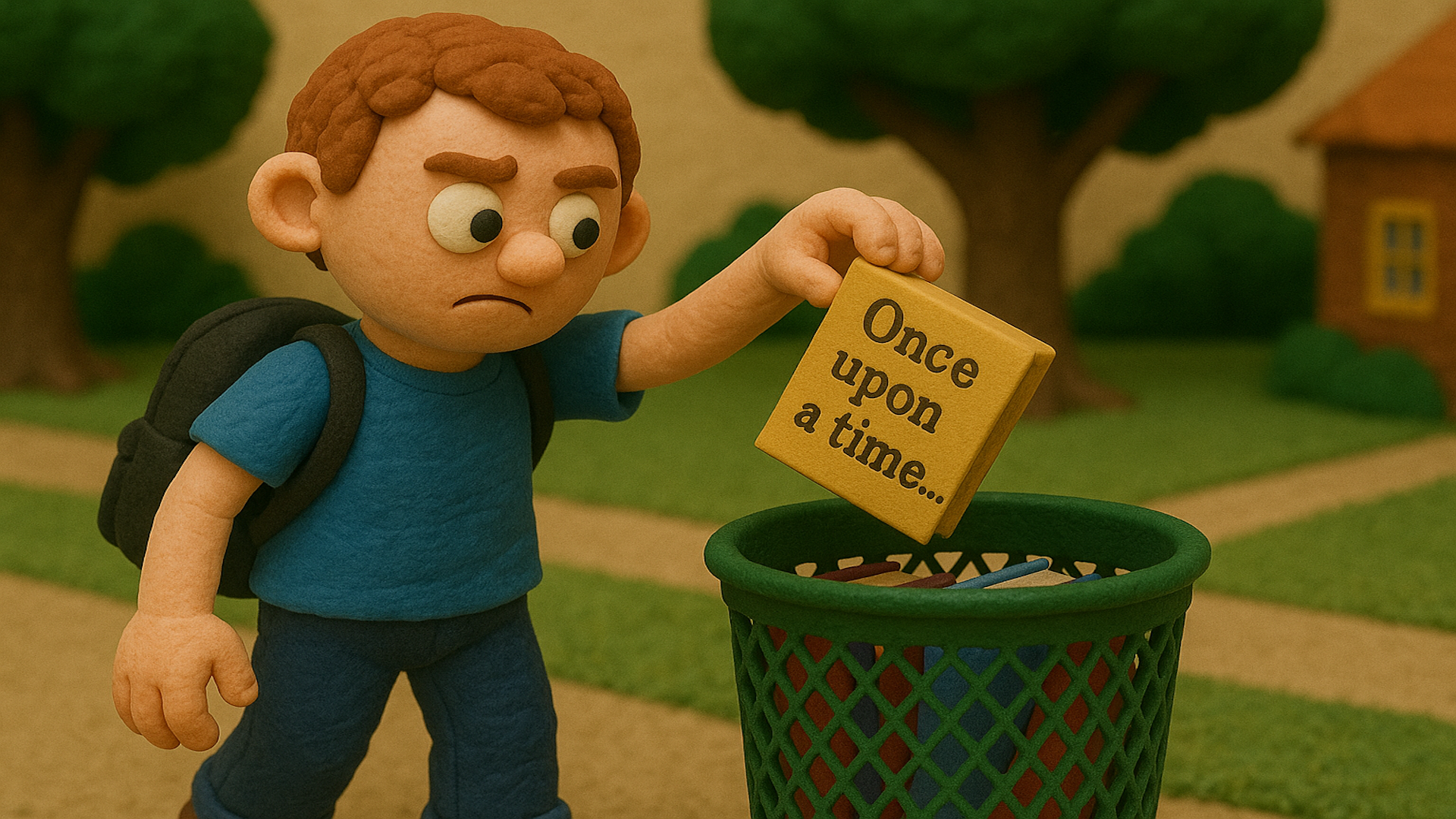
It starts early. A 6-year-old who begs for one more bedtime story becomes an 8-year-old who reads independently—and then, seemingly overnight, a 9-year-old who just doesn’t want to read anymore.
Researchers call this the “Decline by 9”—the sharp drop in children’s motivation and enjoyment of reading that tends to appear around fourth grade¹. It’s a troubling trend that has persisted for more than a decade, and recent data show it’s growing worse in the digital age.
But this isn’t a story of failure. It’s a call to understand why this decline happens—and what we can do to help today’s 3–9-year-olds grow into lifelong readers before they reach that cliff.
The “Decline by 9” Is Real—and Worsening
Scholastic’s Kids & Family Reading Report (2024) found that the percentage of children who say they love reading for fun drops sharply between ages 8 and 9—from 57% of 8-year-olds to just 35% of 9-year-olds². That same transition coincides with the shift from learning to read to reading to learn, when school assignments and testing begin to dominate.
The National Literacy Trust (2024) similarly reports a steady decrease in reading enjoyment from ages 8–11³, with fewer children describing reading as “something they choose to do.” The decline is particularly steep among boys, who are 2.5 times more likely than girls to describe reading as “boring”³.
Educational researchers call this the “motivation slump”—a point where external pressures and limited choice crowd out the curiosity and joy that drive reading in early childhood⁴.
Why It Happens: Five Forces Behind the Decline
1. Reading Becomes a Task, Not a Choice
By age 9, many children associate reading primarily with schoolwork rather than pleasure. A report from the Journal of Educational Psychology found that when reading is assigned rather than chosen, intrinsic motivation drops by nearly 50%⁵.
At younger ages, children choose picture books filled with color and imagination. By third grade, reading often shifts toward tests, comprehension drills, and required chapters—replacing joy with obligation.
2. Digital Distraction Competes for Attention
Children growing up today are digital natives. By age 8, over 70% own or regularly use a tablet or smartphone, according to Common Sense Media’s Children and Media Report (2024)⁶.
While technology offers access to educational tools, it also shortens attention spans and rewires motivation. The National Literacy Trust notes that children now spend more time on short-form content—like videos or mobile games—than on sustained reading, reducing their ability to focus on longer stories³.
3. A Narrow Range of Reading Choices
Research shows that children are more likely to finish and enjoy books they choose themselves, yet many lose that freedom as they enter school². Classroom reading lists, leveled readers, and testing requirements can unintentionally strip away personal relevance and agency.
For many children—especially those from diverse backgrounds—available books may not reflect their own experiences or identities. Representation matters: a 2023 Education Week report found that children who see themselves in stories are twice as likely to describe reading as enjoyable⁷.
4. The Transition from Picture Books to Text-Heavy Stories
Around age 8 or 9, children begin to “age out” of illustrated storybooks and move into early chapter books or assigned novels. For some, that leap comes too soon.
A 2023 study from the University of Oxford Centre for Educational Studies found that children transitioning too early from visual to text-dominant formats experience a measurable drop in engagement and comprehension⁸. The shift away from pictures—once a core source of emotional connection—can make reading feel abstract and less rewarding.
5. External Pressures and Testing Culture
Many parents and teachers notice that reading enthusiasm fades as testing increases. The Washington Post reported in 2024 that the rising emphasis on early literacy benchmarks and assessment data often “turns reading into a performance metric rather than a personal pursuit⁹.”
Children quickly learn that reading is graded, timed, or evaluated—conditions that discourage exploration and experimentation. As a result, they begin to view reading as something to complete, not enjoy.
What Parents Can Do to Prevent the Decline by 9
While these forces are powerful, they’re not irreversible. Parents can take small, consistent steps that keep reading connected to curiosity, creativity, and connection.
1. Keep Reading Aloud—Even After They Can Read Themselves
Shared reading doesn’t have an expiration date. Studies show that children up to age 11 benefit from being read to, especially when the reading is interactive and emotionally engaging¹⁰. Listening to stories helps maintain a positive emotional link with books and keeps imagination alive.
2. Offer Choice and Variety
Give your child autonomy. Rotate between comics, nonfiction, poetry, or picture-heavy books—even for older readers. When kids feel control over what they read, they’re more likely to persist².
3. Integrate Technology, Don’t Avoid It
E-books, audiobooks, and story apps can complement physical reading. A 2024 Pew Research Center survey found that children using both print and digital reading formats read 26% more minutes per week than those using only one format¹¹.
4. Model Reading Behavior
Children who see their parents read are significantly more likely to read for pleasure themselves. Set aside “family reading time,” where everyone reads something—even for ten minutes a day¹².
5. Celebrate Completion, Not Complexity
Finishing a short picture book or comic is an achievement. Create small rituals—like adding finished books to a “read shelf” or tracking them on a family chart—to help kids see their progress¹³.
Why This Matters for the Next Generation
The “Decline by 9” is more than a reading problem—it’s a creativity problem. When reading becomes transactional instead of imaginative, children lose one of their earliest pathways to empathy, problem-solving, and self-expression.
Today’s children (ages 3–9) are growing up surrounded by instant entertainment, but they’re also living in a world hungry for creativity and attention. Helping them finish stories—one book at a time—isn’t just about literacy; it’s about shaping lifelong learners who still believe in the magic of a good story.
References
- National Literacy Trust. (2024). Annual literacy engagement report: Reading motivation and decline by age. https://literacytrust.org.uk
- Scholastic. (2024). Kids & Family Reading Report: 8th Edition. https://www.scholastic.com/readingreport
- National Literacy Trust. (2024). Children’s reading enjoyment survey. https://literacytrust.org.uk
- Guthrie, J. T., & Wigfield, A. (2023). Reading motivation and engagement across developmental stages. Reading Research Quarterly, 58(1), 15–35.
- Schiefele, U., & Löweke, S. (2020). The role of choice and control in fostering reading motivation. Journal of Educational Psychology, 112(4), 724–737.
- Common Sense Media. (2024). Children and media report: Digital habits and literacy engagement. https://www.commonsensemedia.org
- Education Week. (2023). Why representation matters in children’s literature. https://www.edweek.org
- University of Oxford Centre for Educational Studies. (2023). Visual engagement and literacy transitions in middle childhood.
- Strauss, V. (2024, March 15). How testing changed reading—and not for the better. The Washington Post.
- Sénéchal, M., & LeFevre, J. (2020). Shared reading and children’s literacy: A meta-analysis. Child Development, 91(2), 234–252.
- Pew Research Center. (2024). Children, reading formats, and media engagement. https://www.pewresearch.org
- Baker, L., & Scher, D. (2022). Parents as reading role models: Longitudinal impacts on child motivation. Journal of Educational Psychology, 114(3), 487–501.
- Cunningham, A. E., & Zibulsky, J. (2011). Tell me a story: Reading for pleasure in childhood. Reading Psychology, 32(6), 540–566.