
 All Posts
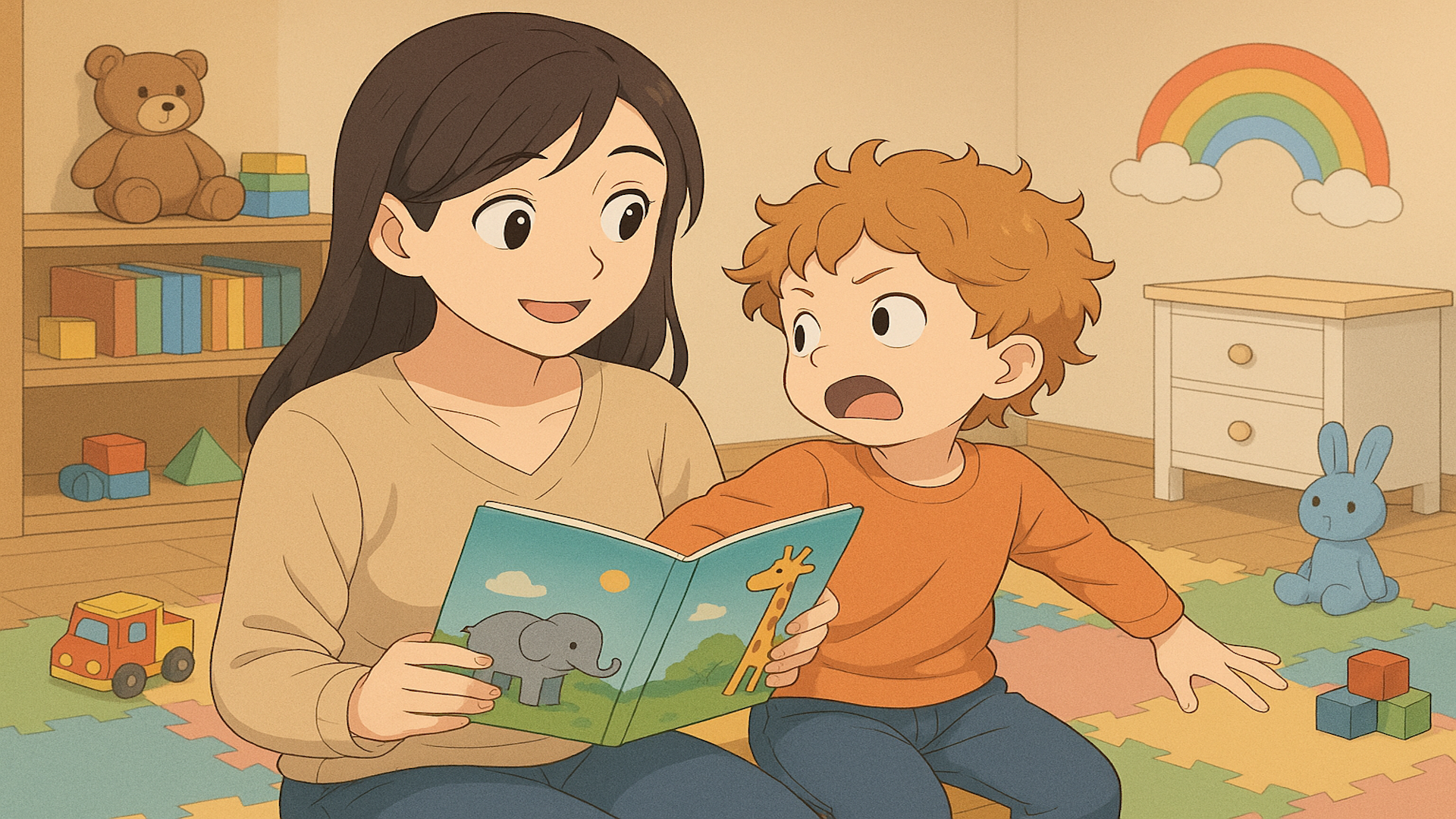
It’s a familiar story in many homes: your child picks up a new picture book, flips through the first few pages with wide-eyed excitement and then drifts away before the story ends.
Sometimes it’s because the pictures caught their attention more than the words. Other times, the story doesn’t hold their focus, or they lose patience sitting still. Whatever the reason, many young children start books they don’t finish¹, and parents are left wondering how to keep them engaged long enough to reach “The End.”
The truth is, finishing a book isn’t just about reading — it’s about attention, curiosity, and connection. Here are five research-backed ways parents can help children not only start books but finish them — and enjoy every page along the way.
1. Pick Books That Match Their Curiosity (Not Just Their Age)
Children are much more likely to finish a book when it reflects what genuinely interests them. The 2024 Scholastic Kids & Family Reading Report found that children are 2.5 times more likely to finish a book when they choose it themselves².
Even picture books labeled “for ages 4–6” or “for early readers” can vary widely in vocabulary, pacing, and theme. A story about dinosaurs might fascinate one child but bore another who prefers animals, robots, or bedtime tales.
Parent Tips:
- Let your child pick their own books — even if they choose the same one again (repetition strengthens comprehension³).
- Look for books with familiar topics or characters they already love.
- For fidgety readers, choose stories with strong visual storytelling, rhyme, or predictable repetition (like Brown Bear, Brown Bear, What Do You See? or Don’t Let the Pigeon Drive the Bus!).
- Avoid books that are too text-heavy — children can lose focus when words dominate the page without engaging visuals.
2. Keep Storytime Short, Consistent, and Positive
Young children’s attention spans are limited — most preschoolers can focus on a single story for about 8–12 minutes⁴. Reading long books in one sitting can lead to fatigue and frustration.
Consistency matters more than duration. Studies show that daily reading, even in short bursts, helps children finish more stories and remember them longer⁵.
Parent Tips:
- Read one short story or part of a longer book each night. End before they lose interest, not after.
- Establish a calm reading time (like bedtime) and keep it part of your routine.
- Use voices, expressions, and pacing to bring the story to life — children engage longer when parents read with enthusiasm⁶.
- If your child asks to stop, pause and continue later — finishing in multiple sittings still counts!
3. Talk About the Pictures — Not Just the Words
Picture books are meant to be seen as much as read. When children get to explore illustrations and predict what’s happening, they stay engaged longer. Research shows that interactive reading — discussing images, asking questions, and making predictions — increases both comprehension and attention span⁷.
Parent Tips:
- Ask open-ended questions: “What do you think is happening here?” or “How does the bunny look right now?”
- Point out small details in the pictures — hidden characters, colors, or emotions.
- Let your child turn the pages or “read” along by describing what they see.
- Encourage them to tell part of the story in their own words; this reinforces memory and sequencing.
When parents treat picture books as a shared experience rather than a one-way reading, children are more likely to stay with the story to the end.
4. Choose Books with Rhythm, Rhyme, and Repetition
Children’s books with rhythmic language or repeated phrases naturally hold attention better. Studies have found that rhyming and predictable text improve engagement, recall, and motivation to finish stories⁸. The familiarity gives children a sense of mastery — they know what’s coming next, which encourages participation.
Parent Tips:
- Look for books with repetition (like The Very Hungry Caterpillar or We’re Going on a Bear Hunt).
- Sing or clap along with rhythmic text — it builds memory and keeps energy high.
- Revisit favorite books often — repetition strengthens vocabulary and emotional connection⁹.
- Encourage your child to “read” repeated lines with you; it turns finishing the story into teamwork.
Books that play like songs or games help children focus through to the end because they’re fun, active, and easy to follow.
5. Model Finishing Books and Celebrate the Ending
Children mirror what they see. When they watch adults finish books — even short ones — it shows that stories have value and closure. Research from the Journal of Educational Psychology shows that children of parents who model reading completion demonstrate higher motivation and persistence¹⁰.
Parent Tips:
- Finish the story, even if your child has wandered off. Hearing “the end” helps them understand stories as complete experiences.
- Praise completion: “You finished the book! That’s awesome!”
- Keep a “finished books” basket or list so your child can see their progress over time.
- Occasionally reread completed stories. Familiar endings give a sense of accomplishment and comfort.
Finishing a book helps children experience the satisfaction of closure — an early form of narrative understanding that strengthens comprehension and confidence.
The Takeaway
When children start books but don’t finish them, it’s rarely about ability. It’s about fit, rhythm, and shared experience. Picture books are designed to capture imagination — and finishing them helps build confidence, patience, and love for reading.
By choosing stories that connect with your child’s interests, reading in short but consistent bursts, and turning books into conversations rather than lessons, you teach them that the best stories aren’t just started — they’re finished together.
References
- National Literacy Trust. (2024). Children’s reading habits and completion rates: Annual literacy engagement report. https://literacytrust.org.uk
- Scholastic. (2024). Kids & Family Reading Report: 8th Edition. https://www.scholastic.com/readingreport
- Mol, S. E., & Bus, A. G. (2011). To read or not to read: A meta-analysis of print exposure from infancy to early adulthood. Psychological Bulletin, 137(2), 267–296.
- American Academy of Pediatrics. (2023). Healthy reading habits and attention span development in early childhood. https://www.aap.org
- National Literacy Trust. (2024). Children’s reading for pleasure survey. https://literacytrust.org.uk
- Trelease, J. (2019). The read-aloud handbook (8th ed.). Penguin Books.
- Sénéchal, M., & LeFevre, J. (2020). Shared reading and children’s literacy: A meta-analysis. Child Development, 91(2), 234–252.
- Patel, L., & Rasinski, T. (2022). The power of rhyme and rhythm in early literacy. Early Childhood Research Quarterly, 59, 27–39.
- Cunningham, A. E., & Zibulsky, J. (2011). Tell me a story: Reading for pleasure in childhood. Reading Psychology, 32(6), 540–566.
- Baker, L., & Scher, D. (2022). Parents as reading role models: Longitudinal impacts on child motivation. Journal of Educational Psychology, 114(3), 487–501.